
Powering Possibility. Built for the Frontier.
New Gas Turbines, Explained for the People Who Have to Buy One
A new gas turbine is one of the largest single purchases a power project makes, and one of the least familiar. Most buyers do it once or twice in a career. This site is written for them: engineers, developers and owners who need to understand what they are choosing, what it will cost to run and how long it will take to arrive.
How a gas turbine makes power
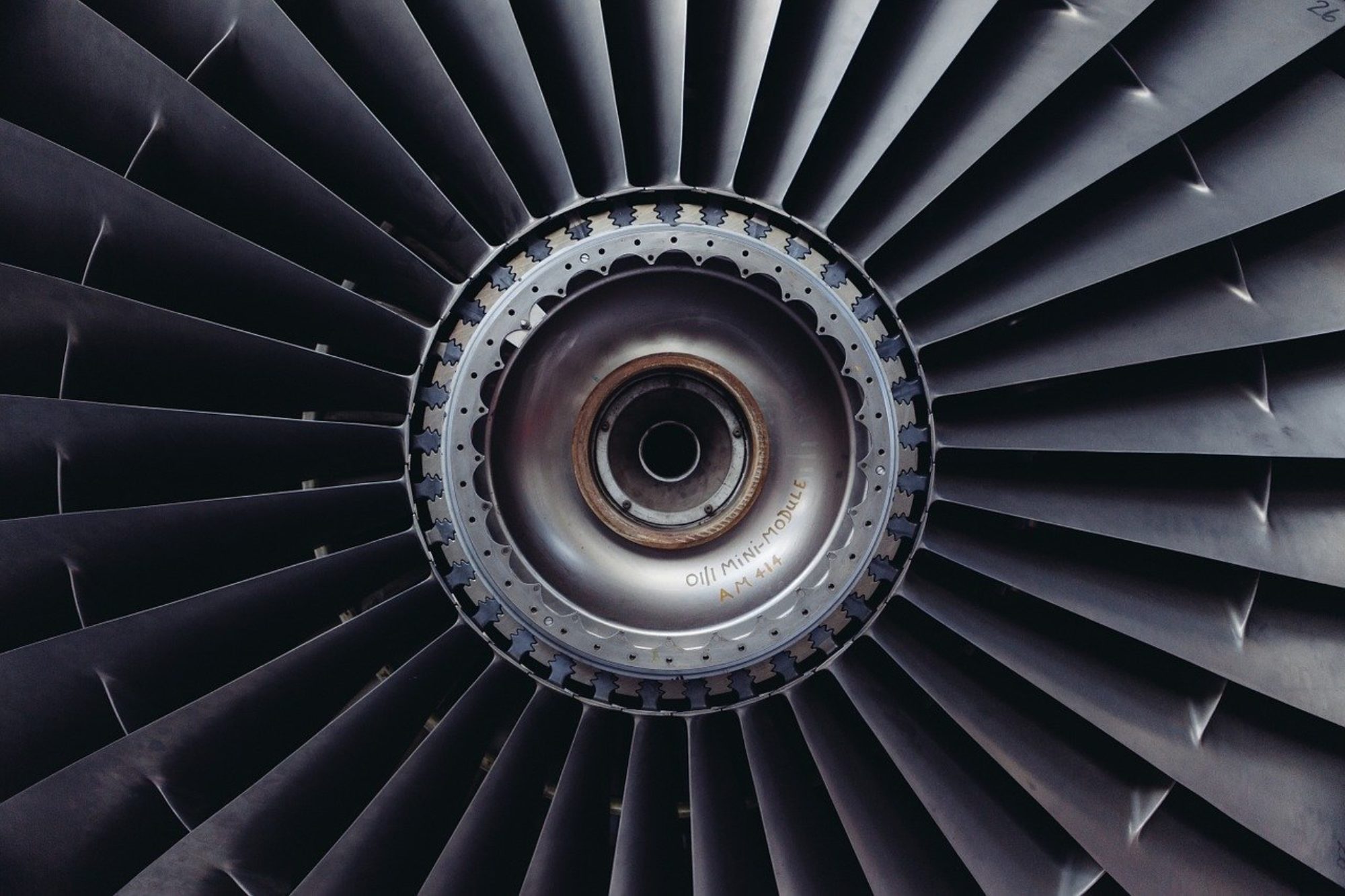
A gas turbine draws in air, compresses it, burns fuel in that compressed air and expands the hot gas through a turbine. Part of the turbine’s work drives the compressor; the rest turns a generator. Because the cycle is continuous rather than a series of piston strokes, a turbine produces a great deal of power from a compact machine, runs smoothly and needs fewer moving parts than a reciprocating engine of similar output.
That design brings trade-offs. Output falls as the air gets hotter or thinner, fuel quality matters, and maintenance is planned around inspections of the hot sections. USP&E’s comparison of turbines and reciprocating engines explains when each one wins.
Aeroderivative or industrial
| Type | Strengths | Typical uses |
|---|---|---|
| Aeroderivative | Light, compact, fast starting, quick to swap | Peaking, mobile and fast-track plants, grid support |
| Industrial (heavy duty) | Robust, long intervals, suited to steady base load | Utility plants, large industrial sites, combined heat and power |
Many buyers choose on the shape of the load rather than on output alone. A plant that starts and stops daily suits a different machine from one that runs for weeks. Our new gas turbines buying guide sets out the decision in detail.
New or used?
A new unit brings the current design, a full warranty and predictable maintenance, at the highest price and often the longest wait. Used and remanufactured units can be available much sooner. The trade-offs are laid out in our comparison of new and used gas turbines, and units available today are shown in USP&E’s turbine stock list.
What to settle before you order
- Site conditions: ambient temperature range, altitude and air quality, which set the real output.
- Fuel: gas composition and pressure, and whether liquid backup is needed.
- Grid: frequency, connection requirements and whether the plant must run islanded.
- Scope: what the package includes and what the site must provide; see our factory acceptance scope.
- Service: who maintains the unit and under what agreement.
On that last point, many owners sign a long-term service agreement with their purchase. USP&E explains how an LTSA works for gas turbines and what to negotiate.
Building and running the plant
Buying the turbine is the start. USP&E packages, installs, commissions and operates gas turbine plants, and plans each step from foundations to commissioning gates. With 150+ power projects in 45+ countries behind us, we have seen most of the ways a turbine project can slip, and we plan around them. If timing is critical, read how long it takes to build a power plant before fixing a date.
What drives lead time and cost
The turbine itself is only one line in the budget. Packaging, controls, inlet and exhaust systems, fuel treatment, the generator and step-up transformer, foundations, buildings and grid connection often add up to more than the machine. Lead times follow the same pattern: when factories are busy, the turbine slot sets the programme, but switchgear, transformers and permits can be just as slow. We build a programme that runs those items in parallel instead of waiting for each in turn.
Inlet filtration deserves early attention on dusty or coastal sites, because it protects the compressor and sets how often the unit must be washed. Our note on inlet air filtration for new GTs explains the options, from simple static filters to pulse-cleaned systems for desert sites.
After commissioning
A new turbine settles into a rhythm of borescope inspections, combustion inspections and hot gas path work, scheduled by fired hours and starts. Owners who plan those outages from the first day keep availability high and avoid paying premium prices for rushed parts. USP&E can operate the plant, support the owner’s team or take on specific maintenance events, and our service agreement scope page shows what a good agreement covers.
Buyer questions
What is the main advantage of a gas turbine?
High power from a compact, smooth-running machine with fewer moving parts than a piston engine of similar output. Aeroderivative units also start quickly.
Why does gas turbine output change with the weather?
Turbines breathe a fixed volume of air, so hotter or thinner air carries less mass and the machine produces less power. Plants are sized for the hottest expected conditions.
Do you supply GE turbines?
Yes, among other makes. We buy, package and maintain GE units on our own account; GE does not own or appoint us, and the same is true of every turbine maker we work with.
Can a new turbine run on fuels other than natural gas?
Many can run on liquid fuels as a backup, and some on other gases, depending on the model and combustion system. Fuel flexibility should be specified at order.
Talk to a turbine engineer
Send the load, site conditions, fuel and target date, and we will tell you which turbine types fit and what the programme looks like. Contact our gas turbine team. You can also reach us on +27 10 822 2324, or put the site data in writing to info@uspeglobal.com.
Powering Possibility. Built for the Frontier.